Smart Weight Management After Medical Interventions: Relieving the Mechanical and Chemical Burden on the Joints
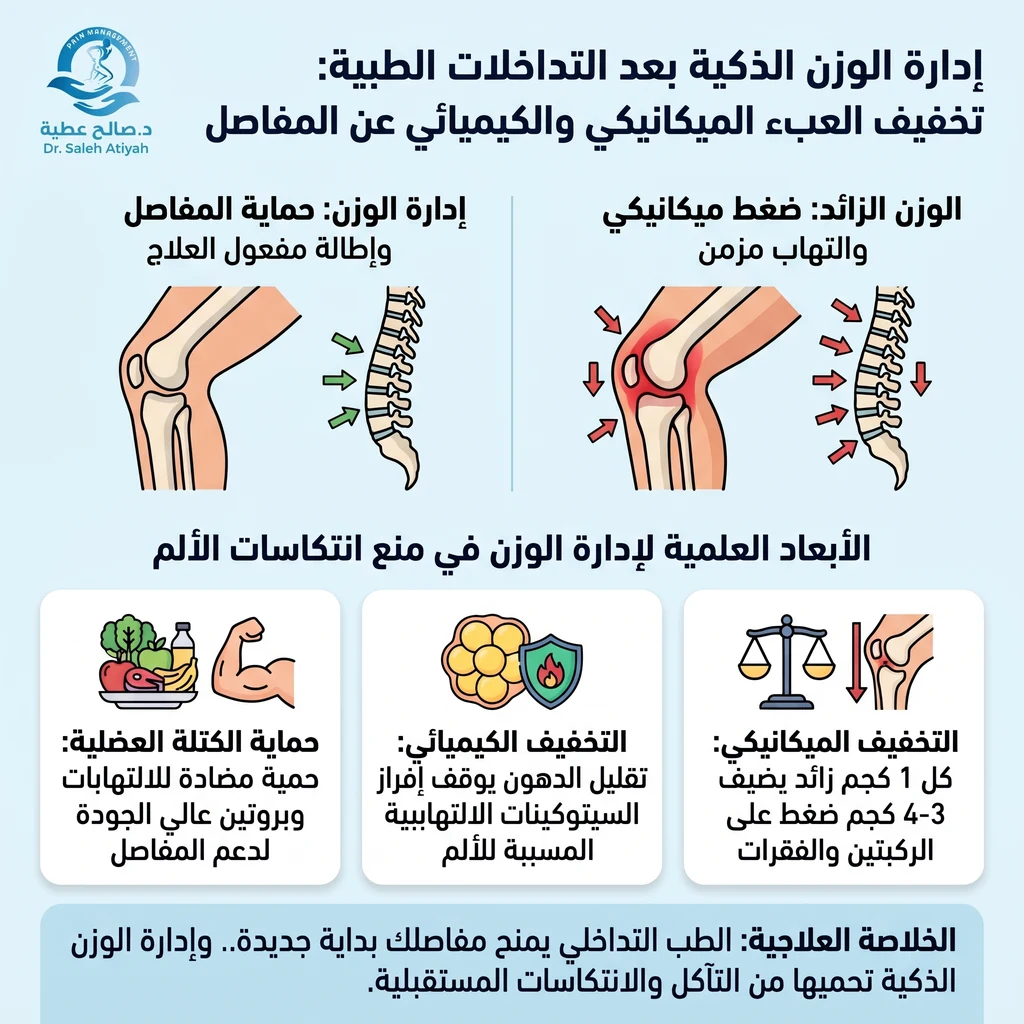
Advanced interventional techniques such as joint injections, epidural injections, and radiofrequency for the back or neck nerve succeed in providing the patient with immediate relief by cutting pain signals and calming local inflammation. However, the long-term persistence and sustainability of these excellent results depend fundamentally on treating the primary mechanical and chemical cause of relapses, which is excess weight.
In modern rehabilitative nutrition, we do not view weight loss as merely a cosmetic matter or lowering the numbers on the scale; rather, it is a mandatory preventive therapeutic protocol that aims to protect the vertebrae and joints treated with interventional procedures through two parallel pathways: the mechanical pathway and the biochemical pathway.
The Scientific Dimensions of Weight Management in Preventing Pain Relapses
Mechanical Unloading (Reducing Compressive Forces on the Joints)
From a biomechanical perspective (Biomechanics), every extra kilogram of body weight translates into multiplied pressure of 3 to 4 kilograms on the knees and lumbar vertebrae while walking or climbing stairs. Clinical studies have shown that losing small percentages of weight (about 5% to 10%) leads to a remarkable and immediate reduction in the mechanical forces compressing the cartilage, which protects the treated joints from accelerated wear and prolongs the effect of the injections.
Chemical Unloading (Stopping Systemic Inflammation)
Excess fat cells in the body are not merely inactive energy stores; they are biologically active glands that secrete inflammatory proteins called cytokines, such as (IL-6 and TNF-alpha). These chemicals flow through the blood and cause a state of chronic low-grade inflammation that increases nerve sensitivity and irritates cartilage throughout the body. Managing your weight and dissolving this fat puts out this source of inflammation at its roots.
Modifying the Dietary Pattern and Protecting Muscle Mass
Nutritional rehabilitation plans rely on following an anti-inflammatory diet (such as the Mediterranean diet) with a focus on supplying the body with high-quality proteins and amino acids to protect and strengthen the muscle mass surrounding the spine and joints. Strong muscles act as a “natural shock absorber” that supports the skeleton and prevents pain from returning.
Therapeutic Conclusion
Interventional medicine gives your joints and vertebrae a pain-free “new beginning”, and smart weight management is the pillar that ensures this beginning is not destroyed under the weight of continuous mechanical loads and chemical inflammation. Combining weight loss with interventional treatment protocols is the only path to sustained recovery and a life free of movement restrictions.
Scientific References
- Interventional Pain Medicine Success: Manchikanti, L., et al. (2013). An update of comprehensive evidence-based guidelines for interventional techniques in chronic spinal pain. Pain Physician, 16(2).
- Weight & Joint Biomechanics / Inflammation: Messier, S. P., et al. (2005). Weight loss reduces knee-joint loads in overweight and obese older adults with knee osteoarthritis. Arthritis & Rheumatism, 52(7).
- Clinical Impact of Weight Loss on Pain: Christensen, R., et al. (2007). Effect of weight reduction in obese patients diagnosed with knee osteoarthritis: a systematic review and meta-analysis. Annals of the Rheumatic Diseases, 66(4).
- Anti-inflammatory Diet & Muscle Protection: Sears, B. (2015). Anti-inflammatory diets. Journal of the American College of Nutrition, 34(1).