Cartilage Repair After Interventional Joint Injections: How Can You Protect Your Joints from Wear?
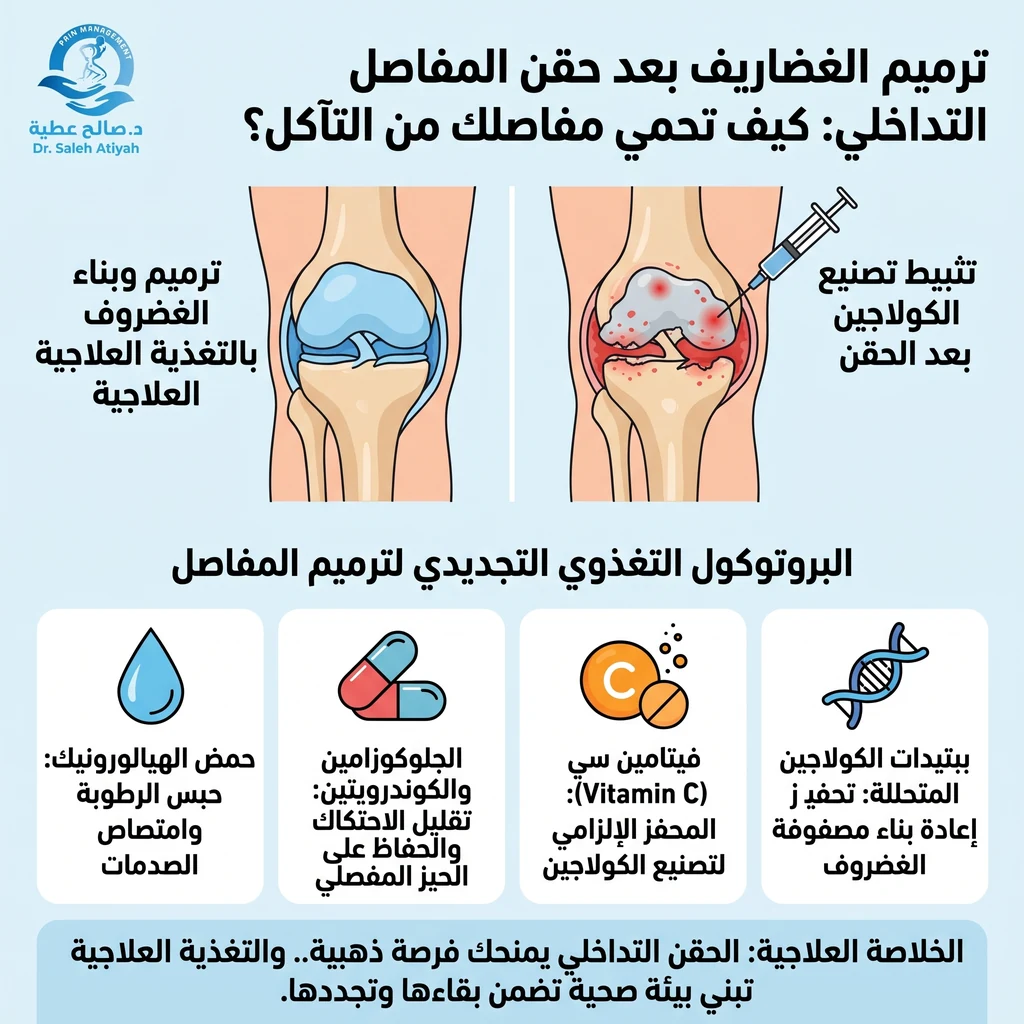
Intra-articular interventional injections (such as cortisone and epidural injections) are highly effective clinical tools for putting out the fire of acute inflammation and relieving severe pain caused by joint osteoarthritis or spinal problems. These interventions give the patient quick, immediate relief and open a window of time to begin physical therapy and movement rehabilitation plans.
However, from a cellular biological perspective, repeated cortisone injections lead to a temporary side effect known as “chondrotoxicity” (Chondrotoxicity). Research published in scientific journals shows that cortisone temporarily suppresses the ability of normal cartilage cells to produce collagen and the proteins that nourish the joint (Proteoglycans). This is where complementary therapeutic nutrition comes in; collagen peptides (Collagen Peptides) and vital nutrients are used as a defensive protocol to rebuild cartilage and protect the joint from wear over the long term.
The Regenerative Nutritional Protocol for Joint Repair After Injections
Hydrolyzed Collagen Peptides
When cortisone suppresses the body’s own collagen production, supplying the body with collagen peptides provides the concentrated amino acids (such as glycine and proline) that the joint urgently needs. Clinical studies have shown that these peptides are almost completely absorbed and accumulate in the cartilage, acting as cellular signals that stimulate cartilage cells to reactivate production of the joint matrix.
Vitamin C - The Essential Catalyst
A cartilage cell cannot link amino acids to produce new collagen fibers without sufficient amounts of vitamin C. Research has shown that vitamin C acts as a powerful antioxidant that protects cartilage cells from inflammation-induced oxidative stress, and serves as an essential cofactor for the building enzymes in the joint.
Glucosamine & Chondroitin
Natural compounds that are part of the composition of synovial fluid and cartilage. Documented studies have demonstrated their ability to prevent mechanical breakdown of cartilage and to maintain the viscosity of the fluid surrounding the joint, easing movement and reducing friction after the effect of the injections wears off.
Hyaluronic Acid
It acts as a natural magnet that traps moisture and water within the layers of cartilage, giving it the ability to absorb mechanical shocks during walking or movement. It is an essential supplement to ensure the flexibility of the connective tissues and ligaments surrounding the treated joint.
Therapeutic Conclusion
Interventional injection removes the inflammation that destroys the joint, but it does not rebuild. Combining collagen peptides with vital cofactors such as vitamin C directly after the injection is what restores the joint’s biological building capacity. This medical integration ensures that the pain-free period is used to build strong cartilage and flexible ligaments, preventing the return of friction and future relapses.
Scientific References
- Corticosteroids & Chondrotoxicity: Wernecke, C., et al. (2015). The effect of intra-articular corticosteroids on articular cartilage: a systematic review. Critical Reviews in Eukaryotic Gene Expression, 25(1).
- Collagen Peptides & Cartilage Regeneration: Bello, A. E., & Oesser, S. (2006). Collagen hydrolysate for the treatment of osteoarthritis and other joint disorders: a review of the literature. Current Medical Research and Opinion, 22(11).
- Glucosamine and Joint Health: Bruyère, O., et al. (2016). In patients with osteoarthritis, is glucosamine sulphate effective? A systematic review. BMJ Open, 6(2).
- Vitamin C & Collagen Synthesis: Boyera, N., et al. (1998). Effect of vitamin C and its derivatives on collagen synthesis and cross-linking by normal human fibroblasts. International Journal of Cosmetic Science, 20(3).