Complementary Nutrition for Botox Injections: How Does Magnesium Enhance the Muscle-Relaxing Effect?
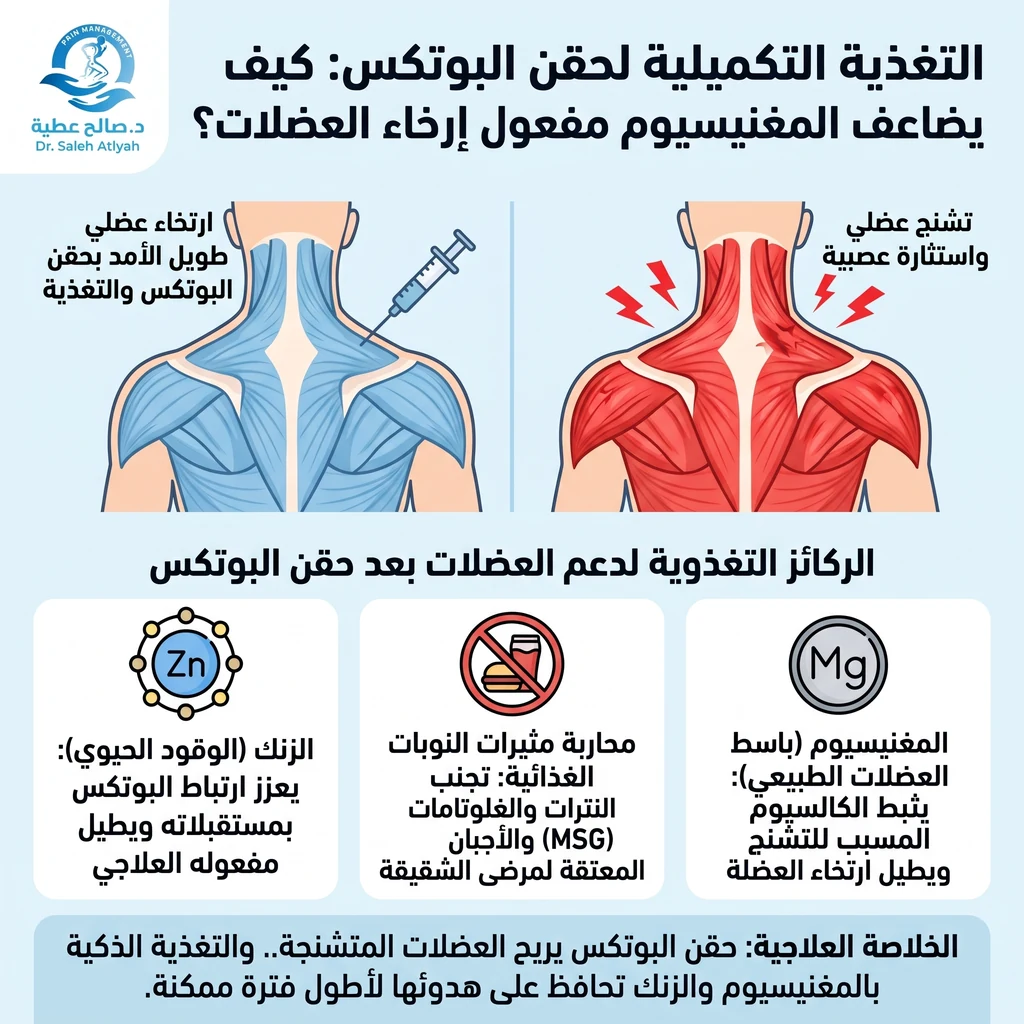
The use of therapeutic Botox injections (Botulinum Toxin) in interventional pain clinics is one of the advanced, proven solutions for relieving chronic muscle spasms and stiff neck and shoulder pain, in addition to its key role in stopping attacks of chronic migraine headache (Migraine). Botox molecules temporarily block the nerve signals directed to the targeted muscles, forcing them to relax completely and preventing the excessive excitability that causes pain.
However, getting the maximum benefit and prolonging the effect of this procedure require a smart rehabilitative nutritional intervention. Recent clinical evidence indicates that magnesium and some micronutrients act as synergistic factors (Synergistic Factors) that enhance the effectiveness of Botox in relaxing muscles and preventing muscle relapses after the effect of the injection wears off.
Nutritional Pillars for Supporting the Body’s Muscles After Botox Injections
Magnesium (The Natural Muscle Relaxant)
Magnesium plays a vital role as a natural inhibitor of calcium within the muscle fibers; calcium is responsible for muscle contraction and spasm, while magnesium is responsible for relaxing the muscle and dilating the blood vessels that supply it. Studies have shown that magnesium deficiency in the body accelerates the return of spasms and reduces the effectiveness of Botox, while balancing its levels prolongs the relaxation of the injected muscle.
Fighting Dietary “Attack Triggers” (For Migraine Patients)
Patients receiving Botox injections for migraine need a strict preventive protocol to prevent the central nervous system from being excited from within. This includes avoiding foods rich in nitrates (Nitrate), monosodium glutamate (MSG), and aged cheeses, which cause dilation of the brain’s blood vessels and trigger pain.
Zinc (The Vital Fuel for Botox Binding)
In their mechanism for cutting pain signals, Botox molecules chemically depend on an enzyme that relies entirely on the presence of zinc (Zinc-Dependent Endopeptidase). Clinical research indicates that taking zinc supplements under medical supervision before the injection and during the treatment period contributes noticeably to enhancing Botox binding to its receptors and prolonging the duration of its therapeutic effect.
Therapeutic Conclusion
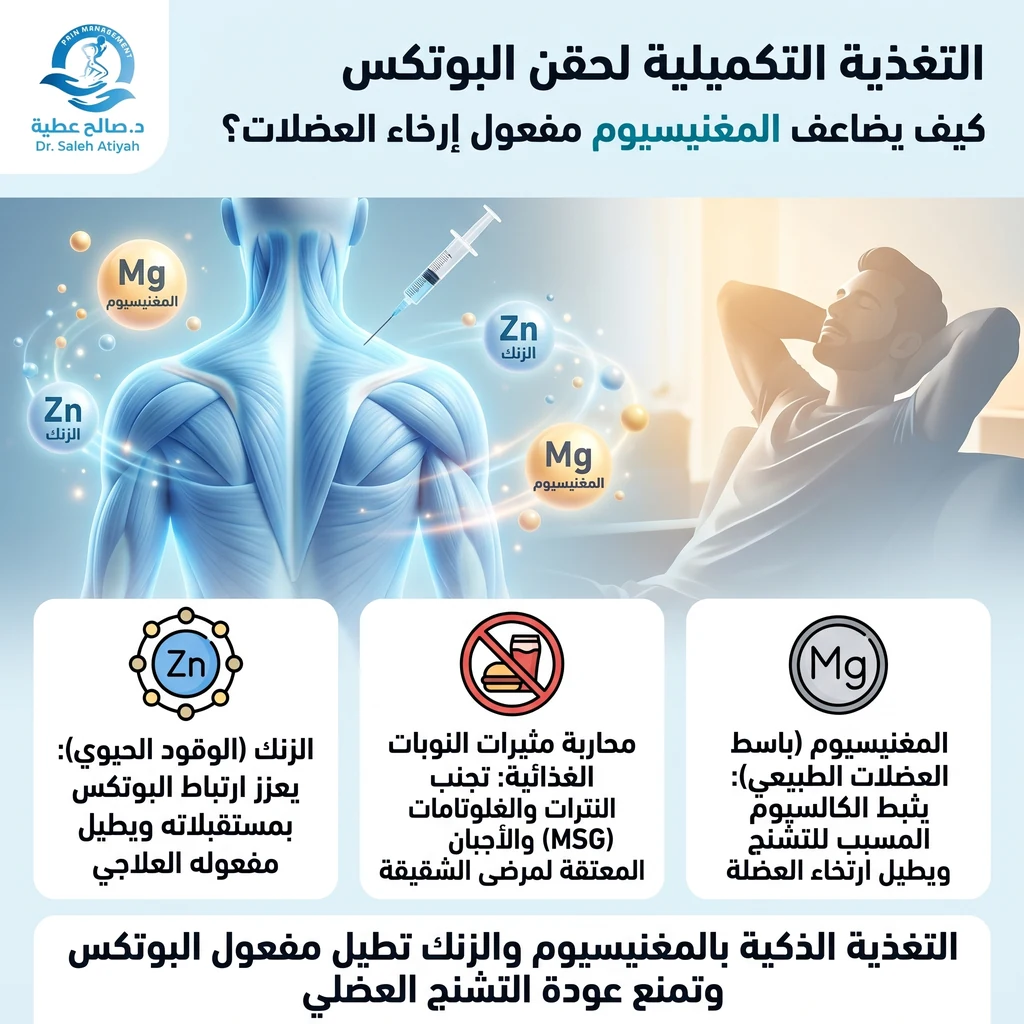
Interventional Botox injection gives spastic muscles a chance to relax and rest, and smart therapeutic nutrition led by magnesium and zinc keeps muscle and nerve cells in a state of mechanical and chemical calm for as long as possible. This interventional and nutritional integration is the foundation of long-term rehabilitation plans to prevent the return of movement stiffness and chronic head pain.
Scientific References
- Botox in Pain Management: Blumenfeld, A., et al. (2010). OnabotulinumtoxinA for chronic migraine: REEMPT clinical program. Headache: The Journal of Head and Face Pain, 50(6).
- Magnesium & Muscle Relaxation: Potter, J. D., et al. (1981). Effect of magnesium on the calcium-stimulated interaction of muscle proteins. Biophysical Journal, 33(2).
- Dietary Triggers in Migraine: Sun-Edelstein, C., & Mauskop, A. (2009). Foods and supplements in the management of migraine headaches. Clinical Journal of Pain, 25(5).
- Zinc & Botulinum Toxin Efficacy: Koshy, J. C., et al. (2012). Effect of zinc supplementation on onabotulinumtoxinA effect: a randomized, double-blind, placebo-controlled study. Journal of Drugs in Dermatology, 11(4).